tag:rome.nd.edu,2005:/news-stories/newstag:rome.nd.edu,2005:/latestNotre Dame Rome | News2026-11-04T09:23:00-05:00Nestled in the heart of the Eternal City, Notre Dame Rome offers students and faculty a veritable feast of art, architecture, history, and religion.tag:rome.nd.edu,2005:News/1867402026-11-04T09:23:00-05:002026-11-04T10:24:06-05:00Notre Dame Rome Congratulates Antonio Carcaterra on His Appointment as Rettore of Sapienza University of Rome
Notre Dame Rome warmly congratulates Professor Antonio Carcaterra on his appointment as the new Rettore of Sapienza University of Rome. A Professor of Applied Mechanics, Carcaterra will officially assume his new role on December 1st, leading one of Europe's largest universities through 2032.
Professor Carcaterra is also currently affiliated to Notre Dame Rome as an Associate fellow, contributing to the academic and intellectual life of our community. Among other collaborations, we are grateful to have him listed as one of the speakers in Dialoghi sull'Umanesimo, a new lecture series organized by Notre Dame Rome in which an interdisciplinary group of scholars will talk about Humanism and its lessons for today. On February 23, 2027 Carcaterra and Italian literature professor Carlo Vecce will engage each other in a conversation onLa Conoscenza - Knowledge.
We are delighted to celebrate this important achievement and wish him an exceptional and successful six-year term as President.
]]>
Costanza Montanaritag:rome.nd.edu,2005:News/1867142026-11-03T13:31:00-05:002026-11-03T13:31:21-05:00Notre Dame Basketball heads to Rome for the Eternal City Tip-Off(Photo by Michael Caterina/University of Notre Dame)
On Sunday, November 1, the Notre Dame Fighting Irish took on the Villanova Wildcats in a historic doubleheader in Rome, featuring both universities’ men’s and women’s basketball teams.
The landmark event celebrated the rich cultural heritage of Rome and Vatican City and honored the shared Catholic traditions of both programs. On Saturday, October 31, the Notre Dame men's and women's basketball teams met with Pope Leo XIV during a private audience. Speaking to students, faculty, staff, alumni, and fans from the University of Notre Dame and Villanova University, Pope Leo XIV reflected on how sports and spirituality can bring people together, build a sense of fraternity and solidarity, and help create a more peaceful world, saying:
“As many of us have experienced, by acting as a concrete means of bringing people together, athletics can teach the values of cooperation and mutual sharing. I hope, therefore, that despite the competitive nature of college basketball, there will be opportunities for the players and the fans of both teams to get to know each other in your days here in Rome.”
Originally published by Notre Dame News at news.nd.edu on November 02, 2026.
]]>
Notre Dame Newstag:rome.nd.edu,2005:News/1866932026-11-03T09:19:00-05:002026-11-03T09:19:53-05:00Notre Dame Campus Ministry announces Global Saints Initiative in Basilica of the Sacred HeartBasilica of the Sacred Heart (Photo by Matt Cashore/University of Notre Dame)
For nearly 140 years, the Basilica of the Sacred Heart at the University of Notre Dame has stood at the center of campus, inviting students, staff, faculty, and visitors alike to celebrate the sacraments and be inspired by the saints depicted in its stained-glass windows and murals.
In early 2027, several new saints will be added to the sacred space in the form of icons displayed on columns inside the nave of the church. Known as the Global Saints Initiative, the installation will feature saints from five continents and nine countries to both represent the many cultural dimensions of the global Catholic Church and reflect the experiences of current Notre Dame students.
“Just as university founder Father Edward Sorin carefully selected saints for the Basilica that spoke to the Notre Dame students of his day, these new icons reflect the diverse vocations, cultures, and backgrounds of today’s campus community and the wider Church,” said Rev. Pete McCormick, C.S.C., assistant vice president for campus ministry. “I am incredibly grateful to have the opportunity to share these stories of holiness with all who visit the Basilica and especially with our students who I’m hopeful will be able to identify with and learn from these witnesses of faith.”
The icons were made possible through a generous gift from longstanding benefactors and Notre Dame alumni Jay and Mary Flaherty. The niece of the late Rev. Theodore M. Hesburgh, C.S.C., president of Notre Dame from 1952 to 1987, Mary is a member of Notre Dame’s Undergraduate Experience Advisory Council, and her husband, Jay, is a member of the University’s Board of Trustees. The Flahertys have supported several University initiatives, including the construction of Flaherty Hall, which opened as a female residence hall in 2016.
“Our support of the University of Notre Dame honors the life and the theme of Rev. Theodore M. Hesburgh, C.S.C., that began with the Basilica of the Sacred Heart World War I Memorial and went on to be depicted in his autobiography, God, Country, Notre Dame,” said Mary and Jay Flaherty. “We are overjoyed to see one of Notre Dame’s most sacred and timeless spaces even more profoundly reflect the beauty of our faith, the richness of the global Catholic Church, and the universality of the call to holiness embodied in these icons.”
To complement the icons, Notre Dame’s Global Catholic Research Initiative will offer a one-credit course through the Department of History in spring 2027. The course, titled Global Saints, will be taught by Kathleen Sprows Cummings, director of the Global Catholic Research Initiative and the John A. O’Brien Collegiate Professor of American Studies and History, and Anna Katharina Rudolph, managing director of the Global Catholic Research Initiative and research affiliate with the Medieval Institute. The course will invite students to visit the installation, consider what makes a saint “global” and analyze how saints have served—and continue to serve—as sites of cultural encounter, political expression, gendered authority, and the Church’s evolving relationship to its past.
The icons are scheduled to be installed in the Basilica in January 2027, just prior to the start of the spring semester. The announcement of the installation coincides with All Saints’ Day, a holy day celebrated annually on November 1, which is dedicated to the saints of the Catholic Church who are now in the presence of God in heaven. To learn more about the icons, visit the Basilica website.
Media Contact: Erin Blasko, director of media engagement, 574-631-4127, eblasko@nd.edu
Originally published by Kate Morgan at news.nd.edu on November 02, 2026.
]]>
Kate Morgantag:rome.nd.edu,2005:News/1866372026-10-30T16:11:00-04:002026-11-02T10:11:33-05:00Applications open for 2027 Rome Archive Seminar
The Center for Italian Studies is pleased to announce that applications are now open for the 2027 Rome Archive Seminar.
This seminar is designed to introduce Ph.D. students from across the humanities to the unique primary sources available in Rome. Working hands-on with materials in the city’s archives and libraries, students will be exposed to the rich potential of a wide range of sources produced from the Middle Ages to the present. Seminar meetings will be held at the Vatican Apostolic Library, the Biblioteca Nazionale, and the Archivio di Stato, and elsewhere. The seminar will also include a series of presentations by senior scholars who will discuss how they have collected and interpreted Roman primary sources in their own research.
The dates for the 2027 Seminar are June 1 to June 25.
There are extraordinary and understudied materials in libraries and archives in the city for archeologists and classicists, art historians and historians, musicologists and students of theater and performance, historians of late antiquity, the Middle Ages, the early modern period and the world, specialists in the Near East and East Asia. The holdings of the Vatican Library alone include priceless manuscripts and documents from East Asia, the near East, and North Africa – as well as a vast collection of ancient, medieval and early modern texts in Greek and Latin, a unique resource for the history and literature of ancient Greece and Rome, of Christianity from its origins until recent times, of relations between Christians and Jews from antiquity onwards, and other subjects without number.
Previous seminar participants include students of art history, history, literature, political science, medieval studies, film studies, and musicology. Their areas of intellectual interest ranged from Byzantine art, papal humanism, hospitals, charity and pilgrimage, Persian embassies and the Chinese missions to art and science, fascist textile production, the history of sexuality, and politics and church in the postwar era. They have taken up primary sources like Anglo-Latin manuscripts, a Hebrew Arthurian legend, socioeconomic records of daily life, institutional records of church and state, art and material culture, films, and twentieth-century letters. Participants have come from Brown, Catholic University, Emory, Harvard, Northwestern, Princeton, Stanford, Syracuse, University of Chicago, University of Melbourne, University of Minnesota, University of Notre Dame, University of Texas Austin, University of Toronto, and others.
We welcome applications from students from any discipline at any stage in their graduate education who have not done extensive research in Rome prior to the seminar. To be eligible to apply, you must be enrolled full-time in a Ph.D. program. The focus of your research need not be Rome but you should have an interest in developing that research through the use of primary sources located in the city. Each successful applicant will receive a stipend of up to $4,000 to defray travel costs, housing, and meals in Rome.
Application Instructions
Please send through Interfolio - https://apply.interfolio.com/193267 - the following documents: a CV, a statement of interest, the name of one referee and the email address of the referee. Please confirm with your referee directly that an Interfolio link arrives to upload your letter of reference.
The application deadline is November 13. Review of applications will take place quickly after the deadline and applicants will be notified of the outcome no later than January.
Please direct any questions about the seminar to Prof. Minor at hhydemin@nd.edu.
Originally published by Demetrio Yocum at italianstudies.nd.edu on September 21, 2026.
]]>
Demetrio Yocumtag:rome.nd.edu,2005:News/1864792026-10-23T10:58:00-04:002026-10-23T12:21:53-04:00Where My Financial Aid Took Me (All Over the World)Angeline meeting Pope Leo during her semester in Rome (Yes, she's actually shaking his hand!)
Although Notre Dame was my dream school, when I received my acceptance letter three years ago, I didn’t want to tell anyone.
At the time, Notre Dame released acceptance letters and financial aid offers on separate timelines.* For one long week, I knew I had gotten into the place I wanted to be with every fiber of my being, but I had no idea whether I could actually attend. It wasn't until my package arrived, along with Notre Dame's commitment to meeting 100% of my demonstrated financial need, that I could finally breathe, celebrate, and begin imagining what the next four years of my life would look like.
I know that’s not just my story. For so many students and families, money decides where we can go, which opportunities we can pursue, and which dreams we’re even allowed to have. Looking back on my years here, I can say Notre Dame’s commitment to closing the gap between what my family could afford and what the University could give went far beyond what I expected.
First of all, college costs more than tuition, housing, and meals. Club fees, campus traditions, winter or professional clothing, and even dorm merch—all these experiences are parts of college that come with a price tag, and Notre Dame is fully aware of that. While it’s easy to think of these as small expenses, through offices like the Office of Student Enrichment (OSE), I have experienced that every student here is given the opportunity to fully participate in college life beyond the classroom without having to constantly wonder whether they can afford it.
But financial support at Notre Dame hasn't just helped me enjoy the little things. It's also made some of the biggest experiences of my college years possible.
Get ready for a ride:
The summer after freshman year, the fully-funded NDBridge program through the Institute for Social Concerns (ISC) took me to East London, South Africa. For eight weeks, I had the opportunity to participate in service and research, translating what I had been learning in my Global Affairs classes into the lives of real people. I also returned to Notre Dame with three new friends: an engineer, a pre-med major, and a business major, people I probably never would have met otherwise, who are still some of my closest friends today.
Angeline and friends in East London, South Africa, during the NDBridge experience
My sophomore summer, an award from the Nanovic Institute for European Studies allowed me to pursue an internship in Rome and Como, Italy, through a connection with the Italian Department. Living and working in another country made me more independent, and it finally put the language I’d been studying to work outside the classroom. That same summer, the Transformational Leaders Program Summer Experience Award and Notre Dame Global Expanding Global Access Award covered nearly all of my study abroad program in Vienna, where I took an economics class on the city’s arts, culture, and music. (Yes, that is a real economics class, and yes, it was awesome.)
Visiting Schönbrunn Palace in Vienna, Austria
Junior year, I went back to Rome for a semester, and my financial aid came along. The Rome International Scholars program also let me extend my stay and intern at CESPI, a political think tank, where I researched relations between Latin America and Europe. I learned about politics and international affairs from conversations, from work, and by embracing the European lifestyle. Being based in Europe also gave me the chance to explore beyond Rome, traveling to places like Egypt, Portugal, Spain, Albania, and so many more. Each of these experiences got me more comfortable with uncertainty, more curious about the world, and more confident in my ability to find my place in unfamiliar environments.
It is crazy to think that any of these experiences could have easily remained only ideas. Places I wanted to visit, opportunities I wanted to pursue, applications I might have never submitted because I assumed they were financially out of reach. Thanks to Notre Dame, they became part of my story. Even more than the places I visited, what stays with me is the people that I met along the way, the conversations that challenged how I understood the world, the friendships that followed me back to campus, and the confidence that I gained from doing things I once would have never imagined for myself.
My experiences are only a glimpse of what Notre Dame has to offer. Across campus, there are offices, institutes, and programs that provide students with the resources and support to explore their interests and make the most of their education. That matters, because an opportunity means very little if you can’t afford to take it.
Today, Notre Dame's commitment to need-blind admissions for domestic and international students gives even more students the chance to imagine themselves here. As an international student from Paraguay, I know exactly what that possibility means.
My education at Notre Dame was never treated like a financial transaction, and it makes a real difference to be seen as someone worth the investment, for who I am and for who I might become.
A view of the Red Sea in Sharm El-Sheikh, Egypt, during Angeline’s semester abroad.
If you’re sitting where I was three years ago, wondering whether Notre Dame could ever be a possibility for you, I get it. Hope anyway. Notre Dame is far more interested in who you are than in what you can afford, and I am happy to report that the “yes” is worth the wait.
*Notre Dame’s Office of Financial Aid now releases financial aid offers alongside admission decisions for families who complete their financial aid application by the priority submission dates.
Originally published by Angeline Felip at admissions.nd.edu on October 20, 2026.
]]>
Angeline Feliptag:rome.nd.edu,2005:News/1864762026-10-23T10:28:00-04:002026-10-23T10:28:05-04:00Notre Dame Global showcases the research and professional impact of international learning
Each summer, Notre Dame Global’s study abroad office sends undergraduates to major global centers like Mexico City, Santiago, São Paulo, Rome, Nairobi, Beijing, Mumbai, Hong Kong, and Taiwan to get a head start on research and career opportunities. Under the banners of the Global Professional Experience (GPE) program, Global Research Experience (GRE) program, and programs like Vietnam Summer: Intro to Design Thinking, participants take on research and experiential learning with Notre Dame’s research and career development partners.
This fall, the study abroad office hosted its first annual poster fair, where students from the programs were invited to share their research and experiences. Carrie Anne Thomas, one of the event’s organizers, said that the fair represented a wide range of student projects. "We had eight great poster submissions in two categories (research and experiential) from three programs (GRE, GPE, and Intro to Design Thinking in Vietnam), representing five global locations.”
Sri Moorthy
The Notre Dame Global selection panel named two winners: Sri Moorthy (research poster category) and Ella Bussell (experiential poster category). Moorthy participated in the GRE program working for a Mexico City-based laboratory on disease detection in mosquitoes. His project, “Wolbachia Infection Dynamics in Urban Culex spp.: Linking PCR-Based Detection and Density to Remote-Sensed Environmental Metrics in Mexico City,” studied how the prevalence and density of Wolbachia bacteria differed in mosquitoes across different regions of the city.
Moorthy reported that he was able to design his own project and carry it out over the course of the summer, with supervision from his lab. He remarked that this represented a rare level of independence that he appreciated in his research.
Bussell’s presentation, “Seeing The Good As A Tool To Innovate,” detailed her efforts to aid Vietnamese upcycled purse brand GAEA with its marketing efforts. GAEA diverts vinyl advertising banners away from landfills, and it provides fair-wage employment to local artisans. Nevertheless, before Bussell’s project, it lacked online discoverability. Bussell, who participated in the Vietnam Summer: Intro to Design Thinking program, helped to craft a new website and social media presence for the company, and established new sourcing partnerships and merchandising strategies.
Ella Bussell
Participants said that their experiences abroad helped them to gain depth in their fields and get the chance to live in a new place. According to Bussell, “Living in Vietnam allowed me to better understand the resiliency and resourcefulness of the local community. During my time living among and studying the cities of Hanoi and Saigon, I was able to notice small cultural practices that compounded into large pieces of the Vietnamese identity. Beyond this, I was able to reflect on my differing global experiences in a comparative context.”
Honorable mention winners included Frank Quian for his research poster titled “Proposal of FAP x VCAM-1 Bispecific Dual-Payload Antibody-Drug Conjugate for Joint Regeneration in Rheumatoid Arthritis with Osteoarthritis Features” and Bryce Miller for his research poster titled “Effective Humanization Strategies regarding Mental Illness and Substance Use Disorder related issues in Emergency Medicine: A Scoping review."
The Notre Dame Global study abroad office encourages students who are interested in the GRE, GPE, and other summer abroad programs such as Intro to Design Thinking Intro to Design Thinking to submit applications in advance of the November 15 deadline. More information about summer programs can be found on their website.
Originally published by Zakir Jamal at studyabroad.nd.edu on October 16, 2026.
]]>
Zakir Jamaltag:rome.nd.edu,2005:News/1864462026-10-22T12:03:34-04:002026-10-22T12:03:53-04:00Pope Leo XIV appoints Notre Dame theologian to the Vatican’s International Theological CommissionFather Khaled Anatolios, the John A. O'Brien Professor of Theology and senior ecumenical fellow in Notre Dame’s Tantur Ecumenical Institute, has been appointed by Pope Leo XIV to the Vatican’s International Theological Commission.
Established under Pope Paul VI in 1969, the commission is composed of 30 scholars from across the globe who are appointed for five year terms. Members are tasked with examining doctrinal questions of great importance and advising the Pope and the Holy See through the Dicastery for the Doctrine of Faith.
Anatolios, a Melkite Catholic priest, is the third Notre Dame theologian to serve on the commission, following Yury Avaakamov who was appointed in 2021 and John Cavadini, appointed in 2009.
“Our Department of Theology at Notre Dame is overjoyed that our colleague Father Khaled Anatolios has been chosen by Pope Leo XIV to serve on this commission,” said William Mattison, the Wilsey College Professor of Theology and chair of the department. “It is a sign of what Father Khaled’s colleagues all know, namely that he does the highest level of theology, always in service to God and God’s people, the Church.
“Pope St. John Paul II exhorted the Church to ‘breathe with both lungs,’ meaning to draw on both Western and Eastern theological resources. By choosing Father Khaled, a Melkite priest whose Byzantine Catholic Church is in communion with the Roman Catholic Church, Pope Leo XIV has continued to help our Church ‘breathe with both lungs.’”
Anatolios, who is also a faculty fellow of the University’s Medieval Institute, is an expert in the history of Christianity and the theology of the early Church. His research focuses on a variety of early Christian theologians and, in particular, the engagement between early Christian theological reflection and contemporary theological concerns.
“I am humbled by the trust of Pope Leo and the Dicastery for the Doctrine of the Faith in appointing me,” he said. “This is an exciting opportunity to serve the global Church in collaboration with a globally diverse representation of eminent theologians. It will be a great honor to represent Our Lady’s University in this capacity.”
Anatolios joined Notre Dame’s Department of Theology in 2015 and served as its chair from 2023 to 2026. He holds a bachelor’s degree and master’s degree from the University of Toronto and a doctoral degree in theology from Boston College.
Media contact: Erin Blasko, director of media engagement, 574-631-4127, eblasko@nd.edu
Originally published by Carrie Gates at news.nd.edu on October 21, 2026.
]]>
Carrie Gatestag:rome.nd.edu,2005:News/1859762026-10-02T12:22:00-04:002026-10-05T06:23:23-04:00Notre Dame Rome to host scholars and cultural institutions for a conversation on the Celio’s layered urban landscape
“Il Colle Deserto” will bring together Notre Dame, the Sovrintendenza Capitolina ai Beni Culturali, and the Museo della Forma Urbis to explore the history and transformation of one of Rome’s most distinctive hills
What might appear to be a deserted landscape can reveal layers of history extending across centuries. On October 8, the University of Notre Dame Rome will host Il Colle Deserto, a day-long gathering exploring the Celio’s distinctive character, cultural life, and changing urban landscape from antiquity to the modern era.
Organized by Notre Dame Rome in collaboration with the Sovrintendenza Capitolina ai Beni Culturali and the Museo della Forma Urbis, the event will bring together scholars and cultural institutions for a conversation centered on one of Rome’s most historically layered hills.
The title of the event draws on the work of archaeologist Antonio Maria Colini, who described the Celio at the dawn of the Renaissance through the landscape represented in the 1474 Strozzi Plan: a hill that appeared almost deserted, marked by the remains of the ancient aqueduct and surrounded by vineyards, vegetable gardens, vegetation and scattered ruins of the monuments, military barracks, villas and residences that had once characterized the area.
Yet the apparent emptiness of the Celio conceals a landscape rich in historical traces. Il Colle Deserto will take this landscape as a point of departure for examining the Celio across different periods, using the transformation and representation of the urban landscape as a common thread.
The event also reflects Notre Dame Rome’s growing engagement with the academic, cultural, and institutional life of the Celio, its immediate neighborhood. Over the past two years, Notre Dame Rome has worked to develop relationships with institutions in the area, strengthening connections that extend beyond the study of the hill’s archaeological heritage to encompass its broader cultural and intellectual life.
“This initiative grows out of Notre Dame’s longstanding relationship with the Sovrintendenza Capitolina, particularly through our collaboration with the Parco archeologico del Celio and the Museo della Forma Urbis,” said Silvia Dall’Olio, director of Notre Dame Rome. “Our work together has created opportunities for our students and faculty to engage directly with the study and interpretation of the Celio, while also encouraging us to build connections with the wider network of cultural and academic institutions that make this neighborhood so unique.”
“For Notre Dame, Rome is not simply a place to visit or observe. It is a place to study closely, to engage directly with a city whose layers of history, artistic achievement, civic life, and religious significance continue to shape the world around us,” said Michael Pippenger, vice president and associate provost for internationalization at the University of Notre Dame.
“Today, Notre Dame Rome has expanded beyond its traditional study abroad programs. It serves as a platform for research, partnership, and engagement with the academic, cultural, and institutional life of Rome, Italy, and the wider region,” Pippenger said.
The program will begin with institutional remarks by Pippenger and Claudio Parisi Presicce, Sovrintendente Capitolino. The morning session, chaired by Fausto Zevi of the Accademia dei Lincei, will focus on the transformation of Celio's landscape between antiquity and the modern era.
Claudio Parisi Presicce from the Sovrintendenza Capitolina will open the scholarly program with a presentation on the transformation of Celio's landscape from the ancient to the modern period. Carmine Ampolo of the Accademia dei Lincei will examine the early history of the hill and traditions surrounding Celio Vibenna, while Paolo Liverani of the University of Florence will discuss the Celio from antiquity through the early Middle Ages.
The afternoon session, chaired by Fr. P. Lawlor of the Basilica of San Clemente, will turn to the visual and documentary history of the hill. Mari Yoko Hara of the University of Notre Dame will explore representations of the Celio in 16th-century drawings and prints, while Margherita Azzari of the Società Geografica Italiana and the University of Florence will examine the emergence of the modern neighborhood through the photographic and cartographic archives of the Società Geografica Italiana.
The day will conclude with a visit to the Parco archeologico del Celio and the Museo della Forma Urbis, followed by a reception.
“At Notre Dame, we value convenings like this because they make possible something more than the presentation of individual research or expertise,” Pippenger said. “They create an opportunity for listening, for the exchange of ideas, for intellectual challenge, and for considering what might be possible through continued collaboration.”
Through events such as Il Colle Deserto, Notre Dame Rome is creating opportunities to bring its academic community into dialogue with scholars and institutions in the city, while engaging directly with the history and contemporary cultural life of the neighborhood in which the Rome campus is located.
Event Information
Il Colle Deserto Thursday, October 8, 2026 University of Notre Dame Rome — Walsh Aula Via Ostilia 15, 00184 Rome
The event will be held in Italian.
]]>
Costanza Montanaritag:rome.nd.edu,2005:News/1858812026-09-30T08:30:00-04:002026-09-30T10:42:20-04:00College of Arts & Letters appoints Luca Grillo to first-of-its-kind global humanities professorship at Notre Dame RomeLuca Grillo
Luca Grillo, professor and chair of the Department of Classics, has been appointed to a first-of-its-kind position in the College of Arts & Letters — a professorship focused on the global humanities with an appointment connected not to a department, but to one of the University of Notre Dame’s global locations.
As the Rome Global Humanities College Professor, Grillo is charged with deepening the research collaborations between Arts & Letters and Notre Dame Rome and enriching the academic experience for graduate and undergraduate students before, during, and after they study abroad there.
“Serving as the liaison between the College of Arts & Letters and Notre Dame Rome is an exciting mandate to expand our global humanistic engagement,” Grillo said. “By driving new student exchange initiatives and weaving tighter collaborative ties with universities and institutions from Rome and across Italy, we will cultivate an enduring scholarly bridge that enriches both academic communities.”
In his new role, Grillo will spend one out of every six semesters at Notre Dame Rome, teaching one undergraduate course there and advising student research projects and leading collaborative workshops and co-teaching a graduate course with partner institutions in Rome. He will also seek to build relationships with archives, universities, and scholars in Rome that will advance the research of Notre Dame students and faculty, including his own.
During his semesters in South Bend, in addition to his regular teaching, research, and service responsibilities to the Department of Classics, Grillo will serve as a key resource for students preparing to study abroad in Rome. He will advise them on courses to take before their semester there, ensure they have completed the necessary language learning, and help them build the skills and connections necessary to conduct research there. When students return to Notre Dame, Grillo will help them further develop their research into senior thesis projects and advise on additional coursework that will build upon their experiences in Rome.
Notre Dame Rome
“As the world’s leading global Catholic research university, we strive for our students to acquire a global perspective in how they see the world and themselves in the world,” said Kenneth Scheve, the I.A. O’Shaughnessy Dean of the College of Arts & Letters. “With a leader like Luca strengthening the ties between Notre Dame and Rome, our students will be prepared to transform their time abroad into a defining experience that continues with them long after they come home.”
Grillo came to Notre Dame in 2018 after serving as the William R. Kenan, Jr. Scholar and associate professor at the University of North Carolina at Chapel Hill and as an assistant professor at Amherst College. He holds a doctorate in classics from Princeton University, a master’s degree in classical and Near Eastern studies from the University of Minnesota, and a bachelor’s degree in literature and philosophy from the Università Cattolica del Sacro Cuore in Milan.
A scholar of Latin and Greek language and literature, Roman history, and Augustan poetry, he is the author of books including How to Make Money: An Ancient Guide to Wealth Management (Princeton, 2024) and The Art of Caesar's Bellum Civile (Cambridge, 2012). He also wrote a commentary on Cicero's De Provinciis Consularibus Oratio (Oxford, 2015) and co-edited The Cambridge Companion to the Writings of Julius Caesar (Cambridge, 2017) with Christopher B. Krebs. He is currently working on a book on irony in Latin literature.
“By placing a scholar of Luca’s caliber at the very center of our Rome presence, we’re creating a model for how our faculty and students engage with the world in ever more dynamic and innovative ways,” said Michael Pippenger, Notre Dame’s vice president and associate provost for internationalization. “We’re grateful for the partnership with the College of Arts & Letters in imagining the power and impact of global humanities professorships.”
Grillo’s appointment is the first of this type that Scheve hopes to create, in partnership with Pippenger and Notre Dame Global, with the intent to have additional professorships tied to many of Notre Dame’s 11 other global locations.
“The humanities are the most vital way of understanding the human experience across time and cultures,” Scheve said. “To conduct influential research and shape the trajectories of our students, we must bring the best scholars into dialogue with people and traditions around the world — and a professorship like this makes that possible.”
Originally published by Josh Weinhold at al.nd.edu on September 30, 2026.
]]>
Josh Weinholdtag:rome.nd.edu,2005:News/1858692026-09-29T15:06:00-04:002026-09-30T09:06:32-04:00In Rome, Notre Dame convening engages women’s voices to help shape Afghanistan’s futureThe Afghanistan Program for Peace and Development is working to elevate women's voices as it seeks broad input on what a peaceful and pluralistic future for Afghanistan might look like. Photo credit: Eric Draper / The White House.
What is the role of religion in Afghanistan? Should a future state have an official religion? How — or should — the international community engage with the Taliban, or does doing so confer legitimacy on a repressive regime?
Hosted by Notre Dame Rome, the gathering brought together 20 women from the Afghan diaspora to wrestle with a variety of issues and imagine a peaceful and pluralistic future. The convening, which was organized to elevate women's voices, united this diverse group around a singular task: contributing to a larger vision for a just, inclusive and peaceful Afghanistan. It is part of a larger effort by the Afghanistan Program for Peace and Development to promote ongoing dialogue in an effort to build that future.
“Hope was a difficult word for me to say,” one participant said, reflecting a sentiment shared by other participants amid ongoing uncertainty over Afghanistan’s future. But hope animated the conversations that unfolded over several days.
Discussion explored core themes that included the role of religion and the importance of inclusion. Participants grappled with how to ensure meaningful representation across ethnic, gender, socioeconomic and regional lines, and called for the inclusion of people with disabilities, LGBTQ+ people and rural communities.
A central question was whether religious pluralism remains viable when some conservative interpretations of Islam disenfranchise vulnerable groups, including women. Participants recognized that religion would likely be part of Afghanistan’s future governance, thus making the work of reimagining its role even more important.
Conversation also focused on international engagement with the Taliban. Participants expressed concern that even minimal diplomatic contact by European and regional powers risks conferring tacit approval on an oppressive regime. This was in tension with another concern: finding leverage to demand that the regime uphold basic human rights.
Navigating this dilemma was further complicated by the reality articulated by an attending diplomat: There is no appetite globally or domestically for armed resistance. This dynamic has led the Afghan diaspora to seek accountability without relying on it.
Following virtual solidarity exchanges with veteran activists from Indonesia, Gaza, Syria, Myanmar and Northern Ireland, the focus shifted from vision to action. Drawing on insights from these contexts, participants formally committed to continuing their work together as they support building a diverse coalition to help shape Afghanistan’s future.
The Rome gathering is part of the broader Dialogue and Visioning Process organized by the Afghanistan Program for Peace and Development. The process brings together multiple constituencies, including scholars, human rights experts, political leaders, economists and activists.
The program has tasked each cohort with drafting a vision document of shared principles for the country's future. Earlier contributions had highlighted the need to elevate women’s voices as part of the conversation.
“Afghan women particularly from marginalized minorities bear the weight of the crisis like no other group,” said Aref Dostyar, program director for the Afghanistan Program for Peace and Development. “That’s why we built a dedicated space for women to facilitate internal dialogues. Their conversations will ripple outward and enrich the ongoing discussions we continue to support.”
Originally published by Rebekah Go at keough.nd.edu on September 30, 2026.
]]>
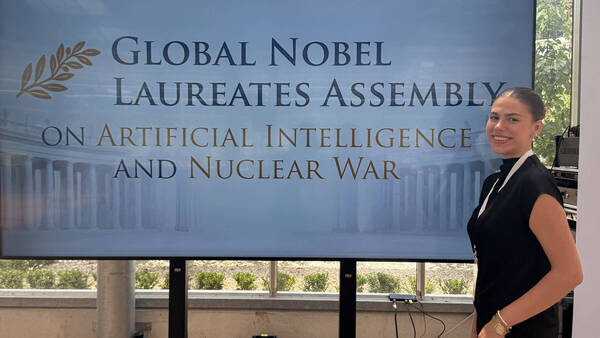
Rebekah Gotag:rome.nd.edu,2005:News/1850952026-08-27T14:46:00-04:002026-08-27T08:46:15-04:00Peacebuilding in the age of AI and nuclear weapons: What I learned in RomeJunior Lillian Post had the opportunity to attend the Global Nobel Laureates Assembly on AI and Nuclear War in Rome this summer, thanks to a course she took with Professor Gerard Powers. The course explored Catholic approaches to war and peace.
Lillian Post is a junior global affairs and peace studies major from Buffalo, New York. This summer, thanks to the Keough School, she attended a major conference on AI and nuclear weapons in Rome.
Lillian co-organized a student project on nuclear disarmament with the Catholic Peacebuilding Network, which is housed in the Keough School's Kroc Institute for International Peace Studies and directed by Keough School faculty member Gerard Powers. She was also a student in Powers' summer Rome course on Catholic approaches to war and peace.
Young people today have been spared the burden of living under the immediate threat of nuclear war, as memories of the Hiroshima and Nagasaki bombings and the Cuban Missile Crisis grow more distant with each year. As a result, many have become less engaged with the issue of nuclear weapons, relying on the false sense of security promised by nuclear deterrence. Yet from these moments of crisis emerged some of the world's most influential peace movements and scientific collaborations
Now, at a time when the world sits on the brink of profound nuclear risk and autonomous technologies are being rapidly integrated into lethal targeting systems, these same actors are coming together once again to form the Global Nobel Laureates Assembly on AI and Nuclear War, calling on a new generation of peacemakers to breathe fresh life into the work they began.
I was fortunate to attend this group’s conference this past summer as a student co-organizer of the Catholic Peacebuilding Network’s Project on Revitalizing Catholic Engagement on Nuclear Disarmament and as a student in Professor Gerard Powers’ summer course on Catholic approaches to war and peace. After this experience, I left Rome with the conviction that nuclear disarmament should be approached through a hopeful and cross-disciplinary lens, especially as the issue relates to the mobilization of young people.
The assembly took place at Borgo Laudato Si’ in the Pontifical Villas of Castel Gandolfo from July 14-16. It convened Nobel laureates, religious leaders and representatives from arms control groups and AI companies. Participants discussed the state of nuclear policy in light of AI developments, and how to move forward. Ultimately, the assembly produced the Rome Declaration, demanding strict human control over AI and the total elimination of nuclear weapons.
Although the conference centered on the growing risks that artificial intelligence poses to nuclear decision-making, it also returned repeatedly to a different question: Who will be responsible for confronting those risks over the coming decades? Discussions about AI quickly became discussions about the next generation, since today’s students and young professionals will inherit both the technologies reshaping warfare and the responsibility of governing them.
Lillian (second from right) and her classmates met with the Vatican's Dicastery for Integral Human Development as part of a summer course on Catholic approaches to war and peace.
What struck me most was that there was no consensus on a single way to engage young people. Some participants emphasized the need to communicate the catastrophic consequences of nuclear war, while others argued that the better approach is to invite young people to the table, listen to what matters most to them, and empower them to motivate their own generation on their own terms. The debate reinforced something I had begun to recognize through my own work in nuclear disarmament: Young people are unlikely to engage with this issue simply because they are told they should. They need an entry point that makes the issue relevant to the questions they are already asking.
The conference’s defining characteristic was its spirit of cross-disciplinary and interreligious collaboration. Physicists, physicians, AI experts, diplomats, ethicists, peacebuilders and religious leaders all approached the issue of nuclear weapons with the shared conviction that no single discipline can address the growing risks posed by nuclear weapons and emerging technologies by itself; but each sector can contribute to the challenges challenges of AI integration and nuclear deterrence.
I believe the same principle applies to revitalizing youth engagement in disarmament. There is no one-size-fits-all strategy for inspiring the next generation. A student studying medicine, computer science, theology, engineering or global affairs will each arrive at this issue through different experiences and motivations. Rather than relying on fear, organizations should meet young people where they are: through the disciplines they study, the platforms they use to communicate, and the questions they are already asking about the future.
My own experience with the Catholic Peacebuilding Network has shown me how powerful one of these entry points can be. My interest in Catholic social teaching and peacebuilding first drew me to questions of nuclear disarmament, giving me a way to approach an issue that can otherwise feel distant or highly technical. Through the CPN’s Project on Revitalizing Catholic Engagement on Nuclear Disarmament, I have been able to connect those interests to conversations about nuclear policy, deterrence, and the future of warfare. Working alongside students and scholars from different backgrounds has shown me that my perspective is not the only way into this conversation, and that is exactly what makes interdisciplinary engagement so valuable.
The future of nuclear disarmament will be shaped by young people who bring new disciplines, experiences and questions to the table.
Today’s challenges are fundamentally different from the Cold War period, when many of these Nobel-winning organizations made their mark on nuclear disarmament, making youth engagement more important than ever. A new technological arms race, requires mobilization and collaboration at new interdisciplinary levels; therefore, the future of disarmament will depend on creating many pathways into the movement rather than convincing every young person with the same message.
Ultimately, what I took away from Rome was not a single answer for how to engage my generation, but a reminder that peacebuilding has always depended on people finding their own ways into a shared cause. The work of nuclear disarmament may have been shaped by the experiences of previous generations, but its future will be shaped by young people who bring new disciplines, experiences, and questions to the table. Our generation may not carry the lived memory of Hiroshima or the Cuban Missile Crisis, but it will inherit the responsibility of ensuring that those tragedies are never repeated.
Read Related Post
Junior global affairs and peace studies major Mia Clarke, who has also worked with Professor Gerard Powers and the Catholic Peacebuilding Network, shares her experience interning with the Arms Control Association this past summer.
Originally published by Lillian Post at keough.nd.edu on August 24, 2026.
]]>
Lillian Posttag:rome.nd.edu,2005:News/1850762026-08-26T16:40:00-04:002026-08-26T10:40:20-04:00An Interview with CJ Jones, the New Robert M. Conway Director of the Medieval Institute
CJ Jones joined Notre Dame and became a Faculty Fellow of the Medieval Institute in 2012 and was appointed Robert M. Conway Director in 2025. Their vision for the Medieval Institute includes enhanced student experiences, international collaboration, and continued support for interdisciplinary research.
Professor Jones earned a Ph.D. in Comparative Literature and Literary Theory from the University of Pennsylvania and holds an appointment as Professor of German Studies. Their interdisciplinary research draws together history, literature, music, liturgy, and manuscript studies to explore how religious women negotiated gendered and religious structures of authority. Their work has been supported by the DAAD, the Andrew W. Mellon Foundation, the Alexander von Humboldt Foundation, the Notre Dame Institute for Advanced Study, and the National Humanities Center.
We sat down with Prof. Jones to talk about their new appointment at the Medieval Institute, their dedicated career in Medieval Studies, and what they wish to see for the next years of the Medieval Institute.
What excites you about the Middle Ages and your profession?
Studying the Middle Ages shapes my actions in the world today. I often come across sources that make me wonder, what on earth were these people doing, and why? Many medieval historians wonder this too, and then we ask ourselves the natural follow-up, what on earth are we actually doing? Through curiosity and historical rigor—reading sources carefully and thoroughly, checking for bias, and testing ideas—we can let the past teach us and then use this knowledge for good in the present.
Here’s a personal example. My spiritual experience of singing has been deepened by medieval writers. I have sung in choirs since I was young, and I am passionate about sacred music. Although I love the challenge of singing a vocal line alone, singing together with others moves me deeply in a way that solo singing never has. I wrote my dissertation on voice in medieval German mysticism and studied how medieval writers theorized why singing together fosters experiences of the divine. This research taught me to think very deeply about how singing in choirs opens me to powerful feelings of fellowship and communion.
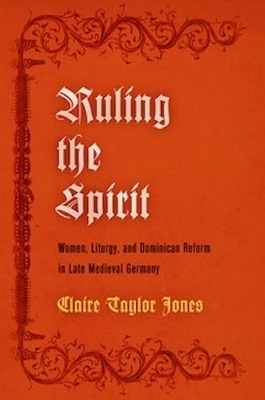
This approach to inquiry also extends deeply into my scholarly work. For example, after studying medieval theologies of song, I wanted to understand how communities built institutional structures to support people’s spiritual lives. This research led to my first monograph, Ruling the Spirit: Women, Liturgy, and Dominican Reform in Late Medieval Germany (2017), which explores how Dominican sisters rooted divine experience in strict observance of religious rules and statutes. To understand how mysticism blossomed out of the Dominican order’s rules, I asked, what were the contexts and circumstances constraining how these rules were written and enforced? What were their unintended consequences, or where were the rule’s blind spots? What sort of person were these rules intended to form?
These questions guided me too when I took on my first role within the Medieval Institute. I became the Director of Graduate Studies in 2019 and completely revised the Graduate Handbook, which describes the requirements for our Ph.D. program. I wanted to improve our students’ training and experience, so I put my research to work and asked, what are the contexts and circumstances constraining the MI’s course of study? What are the Handbook’s unintended consequences and blind spots? What sort of person are these rules intended to form? The lessons we learn from the Middle Ages help us build communities where all can flourish.
Through curiosity and historical rigor—reading sources carefully and thoroughly, checking for bias, and testing ideas—we can let the past teach us and then use this knowledge for good in the present.
What drew you to directorship of the Medieval Institute?
Its welcoming community! In 2012, I moved to South Bend from Philadelphia, where I had enjoyed a vibrant and close-knit community of medievalist friends. Moving halfway across the country can be lonely, but the Medieval Institute met me with warmth and intellectual curiosity. This fellowship has profoundly shaped the scholar I have become, and I want to pay it forward by cultivating an environment where everyone can thrive.
Communities flourish in shared spaces and I plan to start some informal social venues. Keep your eye out for invitations to no-advance-prep theory reading lunches and off-campus evening gatherings! Of course, the MI will continue to support formal academic programs and initiatives in old and new ways. I look forward to your input and collaboration as we build up our common home.
What role do you see the Medieval Institute playing both at Notre Dame and in the global medieval studies community?
Notre Dame Rome
Both roles involve partnering with others to build nourishing spaces for medievalist scholars. At Notre Dame, the Medieval Institute partners with other campus entities, such as the Center for Italian Studies and ND Rome, to promote visionary endeavors that elevate our scholarship. These shared projects advance Notre Dame's Strategic Framework and Provost John McGreevy’s urge to “think like an institution.” As director, I will foster existing partnerships and seek out new collaborations to maximize the impact of our resources for our medievalist community.
Globally, the MI promotes rigorous study of the Middle Ages by opening our intellectual community to scholars from around the world and partnering with institutions that have complementary strengths. Many academic institutions, both in the US and abroad, face declining resources and faculty. These cuts shrink medievalist communities and reduce available training in research skills. The MI offers world-class instruction in paleography and codicology, and co-taught summer schools and graduate workshops cultivate a new generation of scholars with international training and experience. Welcoming external scholars into our inner networks invigorates our shared intellectual life. By partnering with other institutions, we strengthen the entire field.
Tell us about your vision for the Institute.
My vision for the coming years rests on two pillars: international opportunities and experiential learning.
International partnerships will make us stronger. I am exploring new joint Ph.D. agreements with universities in Europe. I am collaborating with ND Rome on initiatives to promote Notre Dame’s medievalist strengths in the Eternal City. I am working to bring international postdoctoral scholars here to benefit from and enrich the Medieval Institute’s intellectual community. We have so many opportunities to extend the MI’s international reach!
My vision also involves expanding hands-on training and experiences. My own students gained profound understanding of monastic spirituality during a trip to Germany where we sang the liturgy of the hours with communities of nuns. I want to create more opportunities for hands-on teaching, both in the skills of rigorous historical research and through participatory activities. Our students learn paleography and codicology by working firsthand with medieval manuscripts themselves. They can also learn about medieval scribal activity by trying to write Gothic lettering with quills or sewing together a quire. There are many forms of knowledge, many paths to learning, and many ways of touching the past—some literally!
Ultimately, I envision the Medieval Institute as a welcoming and lively home for all medievalists. A home where students and emerging scholars find support and professional mentorship. Where faculty find intellectual inspiration and dialogue. Where international scholars find research collaborators, unique scholarly resources, and training opportunities. Where we strive together to achieve our shared goals. I am greatly excited to serve the field of Medieval Studies at Notre Dame and globally, and I look forward to partnering with all of you to foster the Medieval Institute’s flourishing community.
Originally published by Medieval Institute at medieval.nd.edu on August 17, 2026.
]]>
Medieval Institutetag:rome.nd.edu,2005:News/1849842026-08-21T08:44:00-04:002026-08-21T08:44:24-04:00A scholar’s journey: International student Lipe Fernandes cultivates an intellectual life through PLSLipe Fernandes
When Lipe Fernandes considered his education after high school, he wanted something more than career prep.
He wanted the whole college experience — something that would develop him as a person, not just his resume.
“Education shouldn’t be only a utilitarian thing,” he said. “In college, you have the opportunity to explore more than just what you think you’ll be doing in the future.”
Fernandes’ appetite for something more drove him to leave his home country of Brazil to study in the U.S., and it’s why he’s glad he picked the University of Notre Dame.
“I found something where I can cultivate both an intellectual life and a practical life,” he said.
As an incoming student, he initially majored in economics and philosophy to better understand the forces shaping current social issues. But as he learned more about what he wanted from his undergraduate education, he swapped economics for political science — a field more qualitative and flexible. But there was still something missing.
“At Notre Dame, we have to take philosophy classes, theology classes, literature, languages,” he said. “And I realized I wanted something that didn’t treat them separately, but tried to unify them.”
In his second semester, Fernandes took a University Seminar class — Catholicism & the Disciplines: The Catholic Intellectual Life — with Thomas Stapleford, an associate professor in the Program of Liberal Studies. Stapleford saw how much Fernandes enjoyed the class’ interdisciplinary approach and encouraged him to consider PLS.
Interdisciplinary by nature, the PLS major gives students exposure to the arts, history, literature, natural science, philosophy, politics, and theology through six “great books” seminars. Students also take tutorials that delve into specific disciplines of the liberal arts.
Lipe Fernandes (fourth from the left) and his study abroad group learn about the sites of Rome, including the Colosseum. (Photo provided by Lipe Fernandes)
It was just what Fernandes was looking for.
“PLS isn’t just the academic part of philosophy — it’s giving me the tools to think about anything in a philosophical way,” he said.
Now majoring in PLS and political science, Fernandes spends his days exploring justice and equality through Dante’s Divine Comedy or freedom and humanity through St. Augustine’s Confessions. In conversations with his classmates, he encounters a broad range of perspectives on topics from current events to what it means to be human.
Through PLS, Fernandes has also reframed his political science classes, saying it simply brings similar ideas into the present by thinking about philosophy, history, psychology, and other liberal arts in the context of American politics and international relations.
In spring 2026, the now-senior further pursued his love of philosophy and PLS while studying abroad in Rome. He completed a philosophy and theology program at the Thomistic Institute, an organization that strengthens the Catholic intellectual tradition rooted in the thought of St. Thomas Aquinas. He also took classes on metaphysics and the history of intellectual culture, as well as Italian and medieval art.
During his time in Rome, he was happy to learn that his dorm was only a few blocks from Notre Dame Rome, with the Colosseum and the Archbasilica of St. John Lateran also nearby. It was a piece of home away from home, he said, as his love for Notre Dame’s campus and community grew alongside his intellectual formation over the last three years.
Lipe Fernandes (left) with his friends at the Notre Dame football game against Indiana University in 2024. (Photo provided by Lipe Fernandes)
“Notre Dame has this notion of a university as a little world where you live,” he said. “It’s not just the place you go to school.”
Back in Indiana, Fernandes loves participating in quintessential student experiences — attending football games, joining campus snowball fights, walking around the lakes, and Grotto visits with fellow residents of Keough Hall (followed by either milkshakes or root beer floats in the dorm kitchen). He’s grown in his faith by studying theology, by talking with Keough’s priest-in-residence, and by sharing his beliefs with his friends. Every day, he’s trying new things and meeting new people, his character and his intellect developing in tandem.
That’s what college should be, Fernandes said, and it’s why he’s taking the extra step to make PLS more accessible for others.
This summer, Fernandes brought a bit of what he learned back to São Paulo, where a local priest has started a classical school for young kids. He has helped run the school and create curriculum that taps into his experiences as a student in the College of Arts & Letters.
“If you study things that are good for you as a human person, you can not only become better and happier for yourself, but you can also learn to become a citizen,” Fernandes said. “You know how to perform your duties and be good to each other as brothers and sisters — in your house, your city, your church, your country.”
Originally published by Adah McMillan at al.nd.edu on August 21, 2026.
]]>
Adah McMillantag:rome.nd.edu,2005:News/1849832026-08-21T08:43:00-04:002026-08-21T08:43:47-04:00Two Notre Dame faculty members and University Trustee appointed by Pope Leo XIV as consultors to the Dicastery for Promoting Integral Human DevelopmentEmmanuel Katongole, Clemens Sedmak, and Kathryn “Katie” Koch have been appointed by Pope Leo XIV as consultors to the Dicastery for Promoting Integral Human Development.
On Tuesday (Aug. 18), Pope Leo XIV appointed two University of Notre Dame faculty members, Emmanuel Katongole and Clemens Sedmak, as consultors to the Dicastery for Promoting Integral Human Development. University Trustee Kathryn “Katie” Koch, president and CEO of TCW, a global investment management firm, was also named a consultor.
Katongole, a professor of theology and peace studies and director of the Ansari Institute for Global Engagement with Religion; Sedmak, a professor of social ethics and director of the Nanovic Institute for European Studies; and Koch are among 12 new consultors from around the globe—and the only three selected from within the United States. They have been appointed for a five-year term.
Consultors may be religious or laypeople and are chosen “from among the faithful who are distinguished by their expertise, proven ability, and prudence,” according to the Vatican’s announcement.
“These appointments are a tremendous honor not only for Emmanuel, Clemens, and Katie, but for the University as a whole,” said Notre Dame President Rev. Robert A. Dowd, C.S.C. “We congratulate them on their selection, and we are deeply grateful for the Holy Father’s recognition of their expertise and abiding commitment to the Church. We look forward to the ways their leadership and wisdom will guide the important work of the dicastery.”
Established by the late Pope Francis in 2016, the Dicastery for Promoting Integral Human Development supports the Church’s worldwide efforts in the areas of human dignity and human rights, economic justice, care for creation, migration, and displacement, as well as peace, conflict, and humanitarian crises.
Katongole, who came to Notre Dame in 2013, holds a joint appointment in the University’s College of Arts and Letters and Keough School of Global Affairs. A native of Kampala, Uganda, and a priest of the Kampala Archdiocese, he is the founder and president of Bethany Land Institute, a residential agricultural institute that works with young people to realize the vision, spirituality, and practice of Laudato si’ in Uganda. Before joining the Notre Dame faculty, he served as an associate professor of theology and world Christianity at Duke University and was a founding co-director of the Duke Center for Reconciliation. He earned a Bachelor of Divinity at the Pontifical University Urbaniana in Rome, as well as a master’s in religious studies and a doctoral degree in philosophy from the Catholic University of Louvain in Belgium.
Sedmak, a concurrent professor of theology, holds a joint appointment in Notre Dame’s Institute for Social Concerns and the Keough School. His research focuses on issues of poverty, justice, and the Catholic social tradition, as well as a collaboration with Notre Dame colleagues on the Church’s role in acclimating refugees into Italian society. A native Austrian, Sedmak holds a doctoral degree in theology from the Catholic Private University of Linz and doctoral degrees in philosophy and social theory from the University of Innsbruck. Prior to joining Notre Dame, Sedmak served as the F.D. Maurice Professor for Moral Theology and Social Theology at King’s College London. He also held multiple positions at the University of Salzburg and was president of the Institute for Advanced Studies in Social Ethics in Salzburg.
Koch, a Notre Dame alumna, was named a University Trustee in 2023. Prior to moving to TCW, she spent 20 years at Goldman Sachs in a variety of leadership positions, including chief investment officer of public equity. She graduated from Notre Dame in 2002 with a Bachelor of Arts in economics and English.
Originally published by Carrie Gates at news.nd.edu on August 20, 2026.
]]>
Carrie Gatestag:rome.nd.edu,2005:News/1846172026-08-07T14:56:00-04:002026-08-07T14:56:42-04:00Notre Dame–Yale Dante Seminar Brings International Scholars to Notre Dame Rome
From May 25–27, 2026, Notre Dame Rome hosted the Notre Dame–Yale Dante Seminar, an invitation-only gathering organized as part of the collaborative Dante among Theologians project jointly developed by the Devers Family Program in Dante Studies and the de Nicola Center for Ethics and Culture. Bringing together an international group of leading scholars, the seminar explored Dante and the theological virtues through three days of intensive discussion, while fostering sustained dialogue between literary studies and theology.
The program was organized around thematic sessions dedicated to faith, hope, and charity, alongside broader discussions of literary tradition and the formation of the Dantean canon before and after the Commedia. Presentations and discussions featured scholars from the University of Notre Dame, Yale University, the Universities of Bologna, Cambridge, Erlangen-Nürnberg, Torino, Roma Tre, La Sapienza, and Dallas, among others. The seminar concluded with a session examining the reception of Dante’s works across the medieval and early modern periods.
As part of the ongoing Dante among Theologians initiative, the 2026 seminar exemplified the collaboration between the Devers Family Program in Dante Studies and the de Nicola Center for Ethics and Culturein promoting interdisciplinary engagement with Dante’s thought.
Previous collaborations through the initiative included two panels (panel 1, panel 2) at the de Nicola Center Fall Conference in 2025 that explored the virtue of hope against the backdrop of the conference theme, “living tradition.” By bringing together scholars of literature, theology, and intellectual history at Notre Dame Rome, these events continue to strengthen international research networks while advancing the shared mission of exploring Dante’s continuing significance for theological and ethical inquiry.
Originally published by Demetrio Yocum at dante.nd.edu on August 07, 2026.
]]>
Demetrio Yocumtag:rome.nd.edu,2005:News/1829302026-07-07T14:06:32-04:002026-07-07T14:06:32-04:00Notre Dame Arts Initiative awards over $400,000 for community and campus partners to lead inaugural Arts Biennial programming
The Notre Dame Arts Initiative has awarded 38 grants to foster sustained growth in the arts through partner programming for the inaugural Notre Dame Arts Biennial, scheduled for January through June of 2027. Awardees include 16 regional community partners, 19 campus units, and four Notre Dame Global locations, with another 60 campus units and external organizations involved as collaborators. In addition to funding, partners receive administrative support from Arts Initiative staff for planning, implementation, and promotion.
Projects include theatrical premieres, regional dance and music festivals, multimedia installations, visual art and architecture exhibitions, high-impact arts education programs, international artistic exchange, and more. Biennial programming is open to the public, and events will be held on Notre Dame’s campus, in and around South Bend, and at select global locations.
Occurring every two years, the biennial is an international arts festival rooted in the creative spirit, intellectual energy, and iconic traditions of Notre Dame and the region. Predominantly free programming across the visual, spatial, literary, and performing arts will contribute to the region’s long-term flourishing by enhancing quality-of-life and quality-of-place and by providing new platforms for arts research to positively impact the public.
In his inaugural address, University President Rev. Robert A. Dowd, C.S.C., urged the Notre Dame community to be builders of bridges to live out our mission as a leading global Catholic research university. The biennial is one of the most visible ways the Arts Initiative is responding to that call.
“This scale of coordination and collaboration is unprecedented,” said Michael Schreffler, director of the Notre Dame Arts Initiative. “We are grateful to all of our partners for bringing their energy and leadership to fully realize the vision of the biennial’s inaugural theme of symbiosis: a call to contemplate mutually-beneficial relationships through the arts and create them together in practice.”
Community partners leading biennial programming reflect the strength and diversity of arts and culture across the region. Participating regional community partners include:
Abby Marchesseault Dance Collective
Acting Ensemble
Equity in the Arts, an initiative of South Bend Venues Parks & Arts
Goshen College Music Center
Fischoff National Chamber Music Association
The History Museum
Lubeznik Center for the Arts
Merrimans’ Playhouse
New Industry Dance
Performing Media Festival, produced in partnership with IU South Bend
Saint Mary’s College, Department of Art
South Bend Civic Theatre
South Bend Community School Corporation
South Bend-Elkhart Regional Partnership
South Bend Museum of Art
South Bend Symphony Orchestra
Campus units awarded funding for partner programming similarly span artistic media and represent a University-wide commitment to interdisciplinary innovation. In addition to projects housed in arts departments, campus efforts are also being led by the College of Science, Hesburgh Libraries, the School of Architecture, and a range of interdisciplinary centers and institutes.
Beyond robust support for partner projects, the biennial also closes gaps in cultural access by attracting prominent artists to the region and making the highest-caliber arts experiences available to the public. In addition to world-class artists hosted by the Arts Initiative, signature performances, convenings, and exhibitions aligned with the biennial’s inaugural theme will be hosted by the DeBartolo Performing Arts Center, the Franco Family Institute for Liberal Arts and the Public Good, and the Raclin Murphy Museum of Art.
A dual emphasis on local and visiting artists is a hallmark of Notre Dame’s biennial. “We’re not aware of any other U.S. university currently curating a biennial of this nature and scale,” said Rebecca Struch, Arts Initiative managing director. “Establishing a groundbreaking biennial in northern Indiana, a place with an evolving but often overlooked arts scene, will advance the region as a global gathering place for arts and inquiry.”
“The Notre Dame Arts Biennial reflects what’s possible when our community and local institutions work together,” said South Bend Mayor James Mueller. “This effort will activate our public spaces, support local artists, and strengthen the connections that make South Bend a vibrant place to work and live.”
The Arts Biennial launches at a pivotal moment for the arts across the region and on campus. Informed by its Catholic character, the University’s most recent strategic framework identifies the arts as a key priority and calls for deeper engagement with South Bend and the region. The South Bend-Elkhart region also recently adopted a new Arts & Culture Plan. The biennial builds on these developments by nurturing the arts as a shared community asset that strengthens social bonds and shapes place-based identities.
Contact: Rebecca Struch, Arts Initiative managing director, 574-631-9845, rstruch@nd.edu
Originally published by Arts Initiative at arts.nd.edu on July 06, 2026.
]]>
Arts Initiativetag:rome.nd.edu,2005:News/1827132026-06-24T15:31:00-04:002026-06-24T09:31:29-04:00Vatican journalists share insights on Pope Leo’s election
The Cushwa Center welcomed journalists Elisabetta Piqué and Gerard O’Connell to Notre Dame Rome on June 4 to deliver a public talk on their recent book The Election of Pope Leo XIV: The Last Surprise of Pope Francis (Orbis, 2026). The talk took place in tandem with the three-day symposium Modern Catholic Social Teaching in the American Anthropocene: Theological and Historical Perspectives on Labor and Land.
O’Connell and Piqué have covered the Holy See for decades; they met during Pope John Paul II’s pastoral visit to Ukraine in 2001 and later married. O’Connell, who has reported on the Vatican since 1985, is senior correspondent for America and has appeared on multiple outlets as an analyst for the conclaves that elected Benedict XVI, Francis, and Leo XIV. He is also the author of The Election of Pope Francis: An Inside Account of the Conclave that Changed History (Orbis, 2019). Elisabetta Piqué is a correspondent in Italy and at the Holy See for Argentina’s La Nación. While she has covered the Holy See since the election of Pope Francis in 2013, Piqué previously reported on wars in Afghanistan, Iraq, Kosovo, and elsewhere. She is the author of Francis: Life and Revolution: A Biography of Jorge Bergoglio (Loyola, 2014), as well as Diario de Guerra: Apuntes de una corresponsal en el frente: Afganistán 2001–Irak 2003 (Norma, 2003) and Cien días en Ucrania: Diario de una corresponsal de guerra (Sudamericana, 2023).
Francis to Leo
Pope Francis and Bishop Robert Francis Prevost, O.S.A., at the Vatican. May 15, 2017. R. Siciliani/Vatican Media/Sintesi.
In their book, O’Connell and Piqué argue that although Francis could not choose his own successor directly, “it was ultimately Francis’ shaping of the College of Cardinals that led to Leo’s election.”1 Their narrative of the days of sede vacante and the conclave itself strongly supports this notion of Leo as someone Francis would have chosen. Surrounded by intrigue and ceremony, papal conclaves are, in O’Connell’s telling, always a major focus of interest not only for the world’s Catholics but also for the governments interacting with the Holy See and for other religious leaders.
Part of the fascination—well served by the book’s investigative reconstruction of events—lies in the striking, at times comic convergence of the Church’s most carefully regulated proceedings with the inescapable fact of human limitation. O’Connell noted, for example, the discovery of an elderly cardinal’s apparently inadvertent smuggling of a forbidden cell phone into the conclave, as well as another cardinal’s mistakenly duplicated vote, which nullified an entire ballot.
While much less mystique characterizes the General Congregations that take place between a pontiff’s death and the beginning of the subsequent conclave, O’Connell and Piqué suggested it was during these meetings that the various papabili were whittled down to a select few cardinals with real potential to be elected pope. By the time the College locked itself within the Sistine Chapel on May 7, the journalists’ sources told them, Cardinal Prevost was already among the frontrunners.
O’Connell and Piqué did not describe Leo’s election as a foregone conclusion, but they did call attention to the many ways in which his career had prepared him exceedingly well by the spring of 2025. He had ample pastoral experience from his time as bishop in Peru; he had ample organizational experience as prior general of the Order of Saint Augustine; he was exceptionally well traveled; and his service as prefect of the Dicastery for Bishops gave Prevost a front-row seat to both the inner workings of the Holy See and the Church’s outward direction through its appointment of local “pastors”—bishops—around the globe.
An American pope?
TVBoy (Salvatore Benintende), “The Chicago Pope,” 2025. Mixed media street art in Rome, Italy, near the Chiostro del Bramante.
The authors touched on the matter of Pope Leo’s status as an American, which many around the world (including among the College of Cardinals) confidently assumed disqualified him for the role of Peter’s successor. Yet in reviewing Cardinal Prevost’s experience and deep service to the Church, especially as a missionary bishop, the cardinal electors concluded he was the man to lead the world’s oldest institution. O’Connell argued that at a moment in which the role of the United States in the world has fallen under sharp criticism from many quarters, an American dedicated to peace and justice evidences “the hand of God at work in history.”
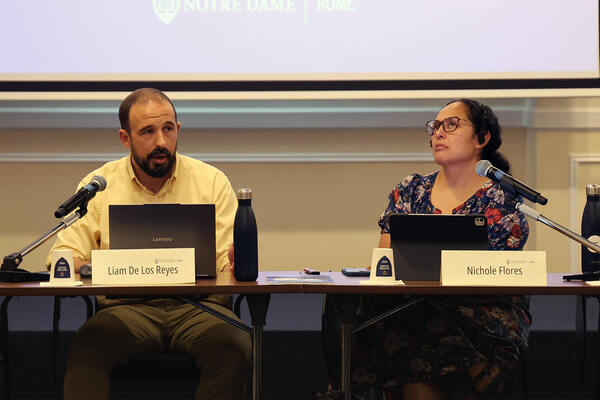
During the session’s question-and-answer period, Nichole Flores (Virginia) asked O’Connell and Piqué about media consumption habits: Where did Pope Francis get his news, and where does Pope Leo get his? More broadly, Flores’s question involved how the pope stays informed about the world. Piqué recalled Pope Francis’s open embrace of his status as less-than-familiar with technology, contrasting it with Pope Leo’s facility with technology—shown not least by his first encyclical, Magnifica Humanitas. (Piqué had noted earlier that very soon after the announcement of Cardinal Prevost as the new pope, his X account was deleted—though it had been following numerous Catholic journalists, including O’Connell.) O’Connell also reflected on the instant and monumental personal shift experienced by every new pontiff, referencing Benedict XVI’s characterization of his own election as the descent of a guillotine’s blade and Leo’s characterization of the papacy as a cross to bear.
Ricardo Cubas Ramacciotti (Universidad de los Andes) asked which were the most enduring and significant reforms initiated by Pope Francis that the authors expected Leo to continue. Piqué called attention to the tragic and even catastrophic circumstances that Leo witnessed as a bishop in South America, including the devastation of widespread poverty, political corruption, and pervasive violence in communities impacted by major global trends, such as climate change and massive (and multicausal) human migration. In considering the basic outlook of both Pope Francis and Pope Leo, O’Connell said, “there is no daylight between them on the fundamental issues.”
Brad Gregory (Notre Dame) asked the authors about a potential change in atmosphere at the Holy See after the April 2026 invective directed at Pope Leo from the highest levels of the U.S. government. O’Connell said that Roman perception of the United States had indeed changed significantly: the pontiff emerged with even clearer moral authority on the world stage. The journalist also suggested looking to Leo’s January 2026 address to ambassadors, in which he decried a new state of global affairs: “War is back in vogue, and a zeal for war is spreading.”2 (Later in the address, Leo referenced the timeless wisdom of St. Augustine’s City of God, which, the pope noted explicitly, had been written in the wake of the Visigoth sack of Rome in 410.) O’Connell argued that this talk, in which the pope heavily emphasized the dual themes of peace and multilateralism, provides the frame through which Leo views all diplomatic efforts, including those involving the United States.
Yet those who watched the end of the conclave on May 8, 2025—stunned along with the rest of the world to see a cardinal from the South Side of Chicago appear on the loggia of St. Peter’s Basilica—know that the pope’s address to the diplomatic corps followed naturally from the start of his mission. Beyond international relations, the pursuit of peace has characterized Leo’s pontificate from its beginning, with his very first words to the world: “Peace be with you all.”3
Michael Skaggs(Notre Dame ’13 and ’17) is an independent historian and co-founder of Chaplaincy Innovation Lab, where he serves as director of programs.
1 Claire Giangravè, “2 new books reveal secrets, alliances behind Pope Leo’s election,” National Catholic Reporter, April 26, 2026, https://www.ncronline.org/news/2-new-books-reveal-secrets-alliances-behind-pope-leos-election.
2 “Address of Pope Leo XIV to members of the diplomatic corps accredited to the Holy See,” January 9, 2026, https://www.vatican.va/content/leo-xiv/en/speeches/2026/january/documents/20260109-corpo-diplomatico.html.
3 “First blessing ‘Urbi et Orbi’ of His Holiness Pope Leo XIV,” May 8, 2025, https://www.vatican.va/content/leo-xiv/en/messages/urbi/documents/20250508-prima-benedizione-urbietorbi.html.
Originally published by Michael Skaggs at cushwa.nd.edu on June 23, 2026.
]]>
Michael Skaggstag:rome.nd.edu,2005:News/1827122026-06-23T15:24:00-04:002026-06-24T09:24:26-04:00Rome symposium examines Catholic social teaching in the AmericasParticipants at the Cushwa Center’s 2026 Rome symposium.
Just days before more than a dozen scholars convened in Rome for a symposium on the Catholic social tradition (CST), the Vatican released Pope Leo XIV’s first encyclical, Magnifica Humanitas, on the human person in the age of artificial intelligence. The timing gave fresh urgency to the conversations about to unfold over three days.
The research symposium, titled “Modern Catholic Social Teaching in the American Anthropocene: Theological and Historical Perspectives on Labor and Land,” opened at Notre Dame Rome on June 3, 2026, with remarks from co-conveners David Lantigua (Notre Dame) and Susanna De Stradis (Mississippi State). Bringing together historians and theologians, the gathering invited participants to consider how CST has developed over time and how it has been received and interpreted in the Americas. Lantigua and De Stradis welcomed the interdisciplinary sessions ahead, including a scheduled visit to the Laudato Si’ Village in Castel Gandolfo, where Pope Francis’s own contributions to CST are vividly present.
The discussion began in earnest with a roundtable featuring David Cloutier (Notre Dame), Christine Firer Hinze (Fordham), Sarah Shortall (Notre Dame), and Paolo Valvo (Università Cattolica del Sacro Cuore, Milan). The relationship between theology and history was raised as a critical question for CST interpretation today—one the symposium was uniquely positioned to address. Firer Hinze reflected on the ways the two disciplines can benefit one another. Theological ethics inattentive to history is “like a skeleton without flesh,” she said. Shortall added that historians can offer a “long-term perspective” that can reveal the contingency and relative novelty of some current preoccupations in the Church, whether in relation to politics or certain assumptions about “the way things are.” Historians’ work shows that systems have beginnings and ends, helping theologians and the Church to take the long view even as they respond to particular crises and challenges. Cloutier, Firer Hinze, and Valvo each emphasized the importance of personal conversion in order for CST to be effective in response to today’s challenges. Forming everyday Catholics to understand the tradition and its implications for their own lives is, they argued, the work of scholars as well.
(Latin) American sources and reception
David Lantigua speaks alongside Elisabeth Kincaid and Ricardo Cubas Ramacciotti.
Throughout the symposium, panelists considered 20th-century Latin America as a “crucible” for Catholic social thought. The political, economic, and environmental crises brought on by neo-colonialism proved a critical testing ground for Catholic action and the theological developments tied to it. Lantigua explored the recent turn in CST to a positive view of “revolution,” a striking development for a tradition that took shape in large part through Catholic responses to the political and social upheavals of the 19th and 20th centuries. Lantigua connected the revolutionary language of Pope Francis to the life of St. Francis of Assisi and the “mendicant revolution” he spurred. This evangelical revolution was simple, poor, and thus prophetic. Lantigua argued that Vatican II is likewise rightly read as a milestone for the Church’s teaching on the poor. While not prominent in the documents of the Council, the plight of the poor was a central theme for many bishops, as evidenced by Cardinal Giacomo Lercaro’s intervention and the Pact of the Catacombs—a 1965 commitment by some 40 bishops embracing simplicity, voluntary poverty, and justice for the poor. During and after the Council, Latin American bishops took seriously the commitment to a relectura (rereading) of the Gospel in light of contemporary realities, Lantigua said. The Argentinian teología del pueblo that developed after Vatican II emphasizes the agency of the poor rooted in the life and culture of the people. This grounds Francis’s support for the nonviolent, revolutionary struggle of the poor against the contemporary tyranny of money.
During a question-and-answer session, Austen Ivereigh (Campion Hall, Oxford) drew attention to how Pope Francis often described the contemporary moment as a “change of era.” Looking to the Latin American episcopal conference at Aparecida in 2007, Ivereigh suggested that “cambio de época” refers to moments in which technological changes are so powerful that existing cultures cannot absorb them. Those cultures are drastically changed, replaced, or lost as a result. For Ivereigh, this sheds light on Francis’s deep concern for culture throughout his encyclicals in response to the technocratic paradigm, as well as an apparent shift in recent encyclicals’ intended audience. In an age of global superpowers, Francis’s encyclicals, as well as Leo XIV’s, seem substantially intended for ordinary people. While global elites are certainly addressed in these documents, Francis’s hope for grassroots activism and popular movements is evidenced by his encyclicals’ noticeable turn to the people.
Ricardo Cubas Ramacciotti (Universidad de los Andes) presented Peru as a case study in the modern anthropologies that coincided with the social turmoil to which the Latin American bishops responded. The loss of legal protections for Indigenous collective personalities and communal lands during the move to liberal republican order paved the way for a “progressivist” paradigm at the turn of the 20th century. The effects on Indigenous and agrarian communities led to a search for solutions on the part of bishops and Catholic intellectuals. Bishops worked to organize social movements, and Catholic intellectuals such as Víctor Andrés Belaúnde saw the possibility of a “living synthesis” of Peru’s various histories in a common reality to which Christians could respond together.
Jaime Pensado (Notre Dame) showed how overlapping struggles across Latin American countries engendered a broader continental identity under the concept of the “Patria Grande” in the 1960s. This identity was marked by a movement away from European ideas to distinctly Latin American ones formed by grassroots political action and concerted ecclesial efforts to make sense of that action in light of the Gospel.
The process of identity formation was crystallized in the art of the period, as Stephen Andes (Bushnell) showed in his comparative analysis of St. Clair Bourne’s Let the Church Say Amen!, a documentary-style film about a Black church organizing in Atlanta during the Civil Rights Movement, and Aldo Francia’s Ya no basta con rezar, a feature film about a fictionalized priest’s conversion to the cause of liberation in the port city of Valparaíso, Chile. Each centers on a clerical protagonist struggling with the tension between his ecclesial position and his concrete historical circumstances. Both films evidence a “politics of contestation” entailed in maintaining or shifting ecclesial identities in times of social upheaval. However, the heart of the conflict is often largely intra-ecclesial. Who are we as a church? What matters to us and how will we respond? The ideological urgency of the Cold War fueled Church conflicts, but they nonetheless remained mostly in-house affairs, surrounding ethical/moral disagreements, generational differences, and the role of the religious institution in this-worldly affairs.
Ecology and land
Questions regarding the Anthropocene—a term for the planetary condition in which human activity has destabilized the relatively stable environment of the Holocene, posing serious ecological, political, economic, and ethical challenges—loomed large throughout the symposium. What has the Catholic Church’s social tradition taught about addressing climate change, and what does the still-worsening climate crisis teach about the possibilities and limitations of CST? Brad Gregory (Notre Dame) raised such questions through an analysis of the reception of Laudato Si’ and climate trends that have only progressed since its publication. Gregory reads Laudate Deum as a sobering point of reflection for CST enthusiasts, an intensified cry for change in a world that has yet to listen. Gregory concluded with further questions: What canCST accomplish? And what does the virtue of hope look like in the Anthropocene?
In his presentation, Matthew Whelan (Duke) offered a kind of response to Gregory’s through the life of Dorothy Stang. Her work in Brazil exemplified an alternative vision of land reform in response to the concentration of land ownership and extractive agricultural practices harming vulnerable communities. Stang modeled “integral agroecology,” a common use politics of land that extends beyond land access to promote human and environmental flourishing. Whelan argued that the mere redistribution of land fails to adequately respond to the sustainability crisis in Latin America and elsewhere. For Stang and others across Latin America, collective practices of sustainability such as cooperatives and communal organizations served as schools of solidarity ordered to sustainable forms of social life. Stang’s example highlights the need for more attention to the human relationship to land in the CST’s anthropological vision: “The death of the forest is the end of our lives” read one of Stang’s T-shirts.
Creation and creativity
Liam de Los Reyes and Nichole Flores
CST must continue to take seriously the role of Creation in living a truly human life, as Liam de los Reyes (Mount Angel Seminary) also brought to the fore. De los Reyes explored CST’s vision of human ecological governance through a contrast between exploitative domination and dominion ordered to the good of all Creation. Does the biblical imperative to till and keep the earth inevitably lead to human domination? In Laudato Si’, Francis does not deny the unique role of human beings in governing the created order. Francis’s focus on human dominion, de los Reyes argued, is a response to God’s command that contradicts and counteracts the domination paradigm. This dominion entails the exercise of human capacities to understand the good and order the world. It necessarily involves the prudent development of the human world by the many. It calls forth our social and political capacities, requiring humble participation in the created order.
The theme of humility before Creation was also developed by Nichole Flores (Virginia), who highlighted the role of human creativity in CST’s anthropological vision. In response to the technocratic paradigm and the emergence of AI, recent popes have increasingly called for slow attention to the world around us and to what makes us human. Taking the time to develop and express human creativity is not just for the prodigy or the virtuoso. It is essential to our humanity, and serves as an embodied formation that allows us to respond to the extractive and efficiency-oriented forces of our time. Creativity helps us to realize the anthropological vision laid out in CST as it enables us to tap into the poetic dimensions of the human experience that set us apart from effective algorithms and fast production “AI slop.”
The human person
Elisabeth Kincaid (Baylor) similarly called for a new look at the way CST, and particularly Leo XIII, develops a vision of the human person that integrates work and leisure, as well as family, religion, and public life. She called out a tendency in business ethics to reference seemingly disconnected themes from CST when applicable, leaving learners with a flat understanding of rather abstract ideas that apply to distinct arenas of activity: Some pertain to business, others to personal life. She proposed a return to Leo XIII’s corpus beyond Rerum Novarum for insights into bridging this divide. As Leo XIII responds to the Enlightenment and its outworkings, he diagnoses its totalizing tendency. The Enlightenment and laïcité are not limited to public life while religion is safe in the private sphere. Rather, Leo XIII sees that modern ideologies aim to encompass every aspect of human life. In response, he argues that the Church does not take up space in a societal sense, but an anthropological one. Christianity must present itself as an ethic that extends across all arenas of life and work. A return to the origins of Catholicism’s modern social tradition might help to retrieve these essential connecting threads.
History and theology
Sarah Shortall speaks alongside David Lantigua and Susanna De Stradis.
To close the symposium, participants reflected on their takeaways from the presentations and discussions. Sarah Shortall commended the benefits of interdisciplinary discussion, while pointing out methodological differences in the disciplines’ respective approaches to CST that ought to be further interrogated. She noticed a tendency among the historians to emphasize a variety of sources from film to popular movements, while theologians were more conversant with magisterial papal teaching, even as they were willing to dialogue with other sources and experiences. She pointed out the need for more work to discern the precise relationship between magisterial documents and other sources engaging social questions, such as social movements or popular art. In other words, she asked, “How faithfully does papal teaching reflect these more local, grassroots forms of engagement, and how exactly do these two kinds of sources relate to one another?”
Participants also noted that the anthropology that runs throughout CST remained a central point of discussion. CST insists on the inseparably social and transcendent dimensions of the human person. It also provides tools for speaking clearly into historical circumstances: economic, technological, political, and environmental. As recent encyclicals have turned to address the people in the pews, the popes are reminding everyday Catholics what it means to be human when other forces are (implicitly or explicitly) communicating a different anthropology: that to be human is to dominate nature, to maximize efficiency and productivity, and to be an individual maximally independent from others. CST today responds to an era of technocracy. It reminds humans of our dependence on God, on one another, and on Creation. Matthew Whelan added that when CST engages withmultiple disciplines and perspectives, those perspectives are “capable of disclosing dimensions of the human that might otherwise remain hidden from a single disciplinary vantage alone.”
The group discussed how, even with its turn to the grassroots and to Catholics in the pews, current CST certainly does not ignore political and corporate leaders. CST reminds them that our future depends upon their decision-making as well, and that those who hold power (increasingly, heads of companies as much as heads of state) hold much sway over our ability to exercise our distinctively human capacities. It reminds the powerful that the poor, whose faces they may never encounter and whose stories they may never hear, are most impacted by their decisions. In an era of multinational corporations, with each of the “Magnificent Seven” holding more capital than most national GDPs, participants agreed that the Church also stands in a unique position to speak to the issues of the day. They discussed a widespread eagerness for a moral authority that transcends national borders just as such corporations do.
Thus, as Brad Gregory provocatively asked on the opening day of presentations, “What can CST do?” Pontifical documents rarely make detailed policy recommendations, and they garner much criticism when they do. In Magnifica Humanitas, Pope Leo XIV does not propose a concrete, multi-step plan. The symposium’s scholars identified this as a rather intentional choice given the principles and commitments central to CST itself. Subsidiarity and the agency of persons are emphasized in the tradition’s documents and in their grassroots reception. In an era of polarization and great uncertainty about the future, CST offers a social, ecological, and historically conscious anthropology necessary for measured discernment about contemporary challenges. This is a real and valuable intervention on the part of the popes, but requires that scholars across disciplines work together to communicate the tradition, both written and lived, more broadly to everyday Catholics and others so that it can have a sustained impact. As Matthew Whelan reflected on the benefits of the symposium’s discussion for this kind of work, he remarked that the conference’s interdisciplinary character was not simply methodological: “It pointed toward a richer vision of Catholic social teaching itself: a living tradition, attentive to history, open to new forms of knowledge, and increasingly capable of understanding the human within the wider community of life upon which we depend.”
Katherine Mascariis a doctoral student in the Department of Theology at the University of Notre Dame and a graduate research assistant at the Cushwa Center.
Originally published by Katherine Mascari at cushwa.nd.edu on June 23, 2026.
]]>
Katherine Mascaritag:rome.nd.edu,2005:News/1825602026-06-15T16:15:00-04:002026-06-16T10:15:47-04:00Ansari Institute to Host Symposium in Rome
The Ansari Institute for Global Engagement with Religion is pleased to host a symposium on Religion and Global Politics across Disciplines and Publics at Notre Dame Rome. This gathering, which marks the capstone of the inaugural Global Fellows program, will showcase the global fellows’ scholarship following a year of faculty and peer critique and monograph development.
The event brings together three cohorts: the Ansari Institute’s global fellows; their mentors, who are senior scholars at the University of Notre Dame; and participants of the Rome Summer Seminars on Religion and Global Politics. The summer seminarians—a new generation of graduate students researching the intersection of religion and global politics—are hosted by John Cabot University with substantive support from the Ansari Institute. Together these three groups will cultivate a scholarly exchange and celebrate the global fellows' achievements.
The first day of the symposium will feature a keynote with scholar and author Dr. Erin K. Wilson, professor of politics and religion in the faculty of Religion, Culture, and Society at the University of Groningen and recipient of the 2026 Ansari Institute Book Prize. Wilson will offer commentary onthe emerging field of religion and global politics, and reflect on the ways by which diplomats, civil servants, policymakers, journalists, and civil society practitioners might understand and incorporate religious literacy into their respective roles.
The second day of the symposium will include a full set of panels addressing themes relevant to the study of religion and global politics, including religion, post-colonialism, and new nations; religion, democracy, and state agendas; and religious networks, identity politics, and religio-political theory. Each session will feature the global fellow(s) who study one or more of these themes, their faculty mentors, and the chair of the session—a senior scholar who will also serve as a critical interlocutor with the panelists. The audience will participate in the discussion following the panelists’ presentations.
The final day of the symposium will be integrated into the European Academy of Religion’s Ninth Annual Conference with each session open to all conference participants. There will be panels on new directions in the study of religion and global politics, religion and international order, interreligious engagement, and managing pluralism. The sessions will feature recent Rome summer seminarians, current global fellows, and members of the Ansari Institute faculty including Interim Director Scott Appleby, Executive Director Mahan Mirza, and Senior Fellow Michael Driessen.
The symposium will end with an "Author Meets Critics" plenary held at the conference. Five scholars of religion and global politics will discuss Religion and World Politics: Connecting Theory with Practice. The panelists include the author, Erin Wilson, as well as Peter Mandaville (Georgetown and George Mason Universities), Kristina Stoeckl (LUISS University), Gregorio Bettiza (University of Bologna), and Scott Appleby (Notre Dame). The panel will be followed by a reception.
The Global Fellows Symposium is taking place in Rome to draw upon the religious and geopolitical resources of the Eternal City, and to bring together (for the first time in person) the global fellows, their mentors, the summer seminarians, and the scholars who gather at the European Academy of Religion. It is expected that this unique combination of place, time, and people will offer fruitful discussion about the emerging field of religion and global politics.
Originally published by Rebekah Go at ansari.nd.edu on June 04, 2026.
]]>
Rebekah Gotag:rome.nd.edu,2005:News/1819812026-05-22T09:27:00-04:002026-05-22T09:28:54-04:00Notre Dame Rome and Hesburgh Libraries Formalize Strategic Partnership to Strengthen Rome Library
Effective May 1, 2026, Notre Dame Rome and Hesburgh Libraries have entered into a collaborative agreement to support staffing, technological enhancement, and operations at the Notre Dame Rome Library, located in the Via Ostilia facility, and to foster partnerships with academic libraries and institutions across Italy.
This partnership represents a strategic investment in the future of Notre Dame’s presence in Rome. Combining local support with institutional expertise from Hesburgh Libraries, the agreement underscores the University’s commitment to the Notre Dame Rome Library as a stable, collaborative, and evolving academic resource.
“I’m delighted to see the launch of this partnership between the Library and Notre Dame Rome,” said Margaret Meserve, Edward H. Arnold Dean of the Hesburgh Libraries. “We’re committed to serving our users wherever they are in the world; thanks to this agreement, we can continue to provide access to excellent collections and services in Rome both now and in the future.”
The library has long served students, faculty, and visitors in Rome in collaboration with Notre Dame’s School of Architecture and Center for Italian Studies. A Fall 2025 assessment reaffirmed its importance while identifying key areas for improvement to sustain recent progress and enable future growth.
This shared commitment between Hesburgh Libraries and Notre Dame Rome, ensures that the Rome Library will continue as an important academic space within Notre Dame’s international ecosystem.
The agreement will support a part-time library professional who will oversee daily operations, collections management, and strategic coordination with local institutions and Notre Dame partners on campus in South Bend. The library professional will also support relationships with local institutions such as the American Academy in Rome and members of the URBiS library network. These partnerships are meant to open new avenues for resource sharing, research support, and academic engagement in the city.
“The formalized collaboration with Hesburgh Libraries significantly contributes to the larger goal of elevating Notre Dame’s visibility in a city as rich with world-level cultural institutions as Rome is,” said Michael Pippenger, Vice President and Associate Provost for Internationalization.
Hesburgh Libraries will be actively involved in the management of the library, providing, among other things, technical support, assistance with major collection initiatives, maintenance of the Rome Library’s web presence, and on-site consultation during the initial implementation phase.